Choosing a cloud AI server manufacturer is not merely a purchasing decision. It shapes how quickly models train, how reliably applications run, and how costs behave over time. Jensen Huang, founder and CEO of NVIDIA, described this shift clearly: “Generative AI is the new computing platform.” His statement highlights a practical reality. AI infrastructure now influences daily business performance.
A capable cloud AI server manufacturer should offer more than powerful GPUs. Look for verified accelerator options, high-speed networking, efficient cooling, and transparent service agreements. A well-designed rack should manage heat beside thousands of watts of compute power. Remote monitoring should reveal memory errors before they interrupt a production workload. Clear replacement procedures also matter when a failed component affects customer access.
Experience deserves attention. Ask whether the manufacturer has deployed similar systems for real workloads, not only laboratory demonstrations. Check support response times, data protection practices, hardware warranties, and upgrade paths. These details often separate dependable infrastructure from impressive specifications. On paper, performance looks perfect. Reality is less tidy.
No provider fits every organization. A startup may value flexible capacity, while a research team may require dense GPU clusters and specialized interconnects. Some manufacturers also depend heavily on third-party platforms, which can complicate accountability. That weakness should not be ignored. Careful buyers compare benchmarks, operating costs, technical support, and long-term reliability before signing an agreement. The right cloud AI server manufacturer becomes a technical partner, not simply a hardware vendor.
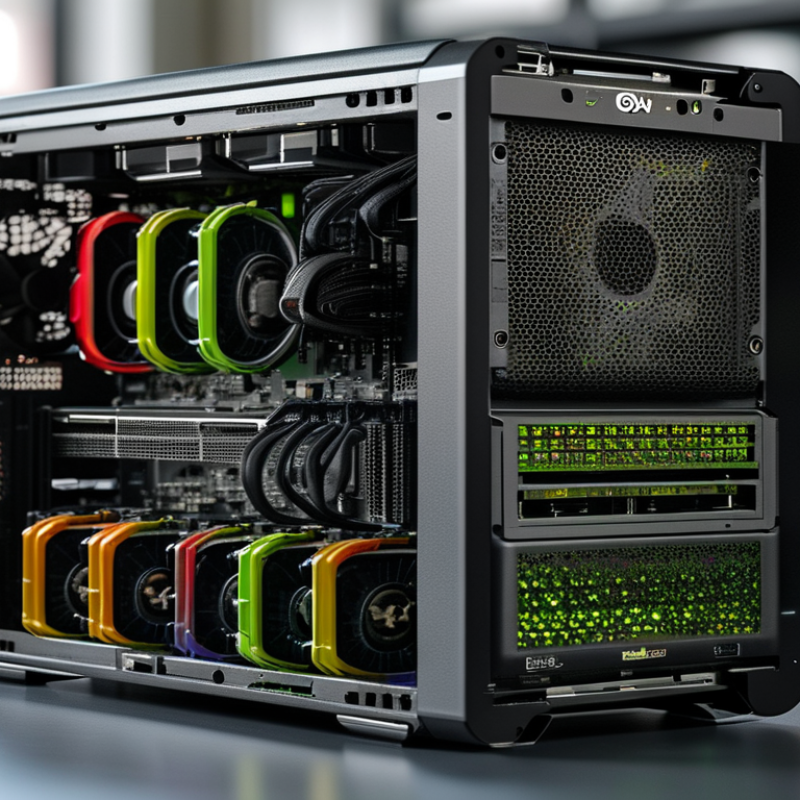
Why Choose a Cloud AI Server Manufacturer?
What Is a Cloud AI Server Manufacturer?
A cloud AI server manufacturer designs and builds infrastructure for machine learning workloads. It combines servers, accelerators, networking, storage, cooling, and management software. The goal is simple: deliver dependable computing through a cloud environment.
A typical system may process training data overnight, then serve predictions within milliseconds. Engineers tune memory bandwidth, power limits, and workload scheduling. They also test thermal performance under continuous loads. This practical work matters because AI servers often operate near their capacity for long periods.
IDC’s 2024 Worldwide AI and Generative AI Spending Guide forecasts global AI spending will reach 632 billion dollars by 2028. It also projects a 29% compound annual growth rate. These figures show why specialized infrastructure is becoming important. However, rapid growth does not guarantee quality.
The label is not magic.
A capable manufacturer should provide measurable uptime, transparent performance testing, security controls, and lifecycle support. The Uptime Institute’s 2024 Global Data Center Survey reported that power-related incidents remain a major cause of serious outages. Therefore, power design and cooling deserve as much attention as processor speed.
Cloud AI server manufacturing also involves honest trade-offs. Faster hardware can increase energy use and operating costs. Flexible virtual machines may reduce utilization during irregular workloads. Even strong systems can fail without careful monitoring, spare components, and disciplined maintenance. That uncomfortable detail is easy to overlook.
| Evaluation Dimension | Cloud AI Server Manufacturer | General Server Supplier | In-House Server Development |
|---|---|---|---|
| Definition | A specialized provider that designs, integrates, and supplies server systems optimized for artificial intelligence workloads, including model training, inference, and high-performance data processing. | A supplier that provides standard server hardware for broad enterprise workloads such as databases, virtualization, file services, and web applications. | An internal engineering team designs and assembles AI infrastructure using separately sourced components and software. |
| Primary Workloads | Deep learning training, generative AI inference, computer vision, natural language processing, scientific computing, and large-scale analytics. | General-purpose computing, business applications, storage services, and conventional virtualization. | Workloads are selected according to the organization’s own research, product, or operational requirements. |
| AI Hardware Integration | Coordinates accelerators, CPUs, memory, storage, power delivery, cooling, and high-speed networking as a complete AI platform. | May provide compatible accelerator options, but AI-specific integration and validation can be more limited. | Requires internal expertise to validate hardware compatibility, firmware, drivers, operating systems, and AI frameworks. |
| Scalability | Supports expansion from a single AI server to multi-server clusters through standardized configurations and high-bandwidth interconnects. | Usually scales well for general IT workloads, but cluster-level AI optimization may require additional engineering. | Scaling depends on internal architecture, procurement capacity, data-center space, and technical resources. |
| Customization | Can commonly configure accelerator quantity, memory capacity, storage type, network interfaces, chassis design, and cooling options for a defined workload. | Often focuses on predefined configurations with fewer AI-specific customization choices. | Offers the highest design flexibility, but every custom decision must be researched, tested, documented, and maintained internally. |
| Cooling Requirements | Accounts for the high thermal output of AI accelerators through airflow design, high-capacity fans, or liquid-cooling solutions where required. | Typically uses standard air-cooling designs intended for conventional server densities. | Must independently plan rack density, power distribution, airflow, cooling capacity, and thermal monitoring. |
| Networking | Can be engineered with low-latency, high-throughput networking required for distributed training and communication between compute nodes. | May include standard enterprise networking, which may not be optimized for distributed AI workloads. | Requires internal selection and testing of network adapters, switches, cabling, protocols, and cluster topology. |
| Deployment Speed | Prevalidated configurations and documented integration processes can shorten deployment and reduce initial setup work. | Standard systems may be quickly delivered, but additional AI validation and optimization may be necessary. | Usually requires longer testing, integration, and acceptance cycles before production use. |
| Software Readiness | May provide tested operating-system images, accelerator drivers, container support, monitoring tools, and AI framework compatibility. | Generally provides basic system support; AI software integration may be handled separately. | All software installation, version control, security hardening, and performance tuning are managed internally. |
| Data Control | Can support private-cloud or on-premises deployment, allowing organizations to keep sensitive data within their controlled environment. | Can also support private deployment, depending on the available hardware and facility infrastructure. | Provides direct control over data location, access policies, security architecture, and retention procedures. |
| Maintenance and Support | Specialized support can cover hardware diagnostics, firmware, cooling systems, accelerator integration, and cluster-level issues. | Support is typically centered on general server hardware and standard enterprise infrastructure. | Internal teams are responsible for troubleshooting, spare parts, upgrades, documentation, and lifecycle management. |
| Cost Considerations | May reduce engineering and integration costs by delivering validated systems, although AI hardware and data-center requirements can create a high initial investment. | May offer lower entry costs for standard workloads, but additional AI components and engineering can increase the total cost. | Can provide long-term control, but design, testing, staffing, facility, power, cooling, and maintenance costs must be included. |
| Best Fit | Organizations that need predictable AI performance, customized infrastructure, private data control, and a scalable path from pilot projects to production clusters. | Organizations whose AI requirements are limited or whose workloads are primarily conventional enterprise applications. | Organizations with strong hardware, networking, software, data-center, and operations engineering capabilities. |
| Key Selection Criteria | Accelerator compatibility, performance per watt, memory capacity, network bandwidth, cooling design, service capability, security, warranty, and expansion options. | System reliability, standard warranty, compatibility with existing infrastructure, price, and general-purpose performance. | Internal engineering capacity, facility readiness, supply-chain access, testing resources, and total lifecycle cost. |
I server manufacturer?
Specialized teams match hardware to real workloads. This can reduce idle capacity, training delays, and costly network bottlenecks.
Look for uptime data, performance tests, security controls, warranty terms, and lifecycle support. Marketing slides alone are insufficient.
AI servers may run near full capacity for hours. Weak cooling can cause thermal limits, slower processing, or unexpected downtime.
A well-designed system may train models overnight and return predictions within milliseconds. Actual speed depends on data pipelines and workload design.
Request workload-based tests using realistic data sizes. Check memory bandwidth, network speed, power use, and sustained thermal performance.
Modular designs can add compute, storage, or networking capacity gradually. Expansion still requires careful planning, compatible parts, and enough power.
No. Monitoring, spare components, maintenance, and skilled support remain necessary. Even strong hardware can underperform when data pipelines are neglected.
A cloud ai server manufacturer designs, builds, and delivers the specialized infrastructure required to support artificial intelligence workloads through cloud-based environments. Its role extends beyond assembling servers: it combines high-performance processors, accelerators, advanced networking, storage systems, virtualization, and management software to create platforms capable of handling model training, data processing, and real-time inference. Many manufacturers also provide deployment assistance, system integration, monitoring, maintenance, and customized configurations for different business needs.
Choosing the right provider can offer scalable computing capacity, improved resource utilization, stronger operational efficiency, and easier access to advanced AI technologies without requiring an organization to build an entire data center independently. When evaluating a manufacturer, buyers should consider hardware performance, scalability, energy efficiency, security, service reliability, compatibility with existing systems, technical support, customization options, and total ownership costs. A careful comparison helps ensure that the selected infrastructure can support current projects while remaining adaptable to future AI development.

 Vertex AI Server