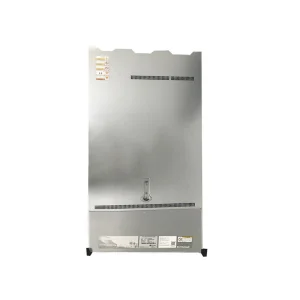
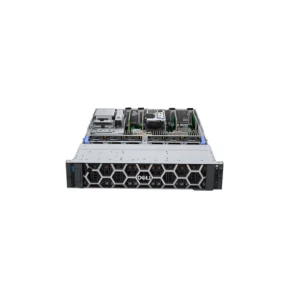
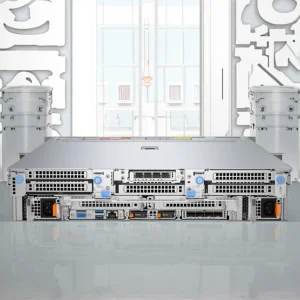
Explore our premium range of custom OEM/ODM hardware engines optimized for high-density virtualization, cloud hosting, deep learning inference, and mission-critical telecommunications deployment.
An Engineering and Strategic Procurement Analysis for Global Telecom Operators, Hyperscalers, and Enterprise System Integrators.
The global telecommunications landscape is undergoing an unprecedented structural metamorphosis. Driven by the proliferation of 5G-Advanced networks, early-stage 6G research, ubiquitous artificial intelligence workloads, and edge computing, traditional network architectures are no longer sufficient. Enterprise telecommunication hardware suppliers and original equipment manufacturers (OEMs) must pivot from standard hardware aggregation to delivering specialized, highly customized, dense compute engines capable of handling high-throughput, low-latency applications.
Modern telecommunication infrastructure demands extreme operational reliability, raw material traceability, high thermal efficiency, and scalable architecture. OEM telecommunication equipment manufacturing has moved far beyond simple sheet-metal assembly; it now encompasses advanced thermal engineering, customized BIOS/IPMI management firmware, multi-architecture microprocessor integration (Intel Xeon, AMD EPYC, Huawei Kunpeng ARM engines), and accelerator GPU integration designed specifically for complex deep learning model inference, automated network management, and massive MIMO (Multiple-Input Multiple-Output) processing.
Strategic Market Takeaway: As global telecom operators deploy Cloud RAN (C-RAN) and Open RAN (O-RAN) architectures, custom OEM hardware provides the exact flex-specifications required to decouple hardware investment from proprietary vendor lock-in, slashing total cost of ownership (TCO) by up to 38% over a standard 5-year network lifecycle.
Telecommunication networks are increasingly driven by AI algorithms that optimize dynamic spectral efficiency, predict hardware failure modes, manage thermal envelopes in real-time, and process edge-based data streams. Consequently, the boundary between a traditional telecom switch/baseband processing unit and an enterprise AI GPU server has virtually evaporated. OEM hardware design now demands multi-GPU support within 2U, 4U, and 8U chassis configurations, coupled with PCIe Gen5 interfaces, NVMe-over-Fabrics (NVMe-oF) storage backplanes, and ultra-high-speed 100GbE to 400GbE SmartNIC interconnects.
Unrivaled vertical integration, component availability, advanced prototyping speed, and global logistics efficiency.
China's centralized electronic component manufacturing hubs allow custom OEM engineering teams to execute New Product Introduction (NPI) cycles in weeks rather than months.
Deep integration with both western standard (Intel Xeon, AMD EPYC) and localized next-gen processor architectures (Huawei Kunpeng ARM, xFusion platforms).
Strict quality control protocols guarantee full traceability of raw materials and 100% full-inspection compliance across every hardware unit before export dispatch.
Tailored OEM hardware solutions optimized for real-world deployment across telecom networks, cloud data centers, and enterprise environments.
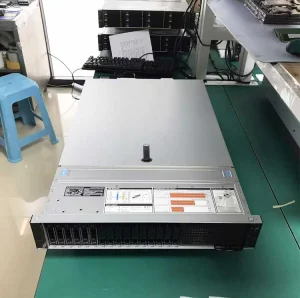
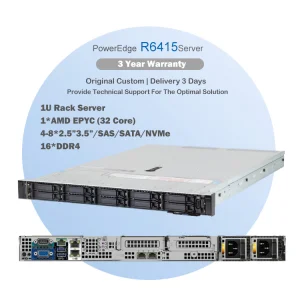
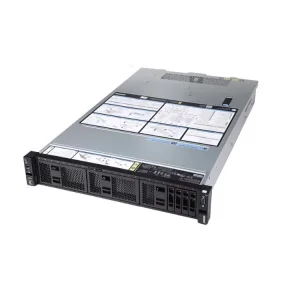
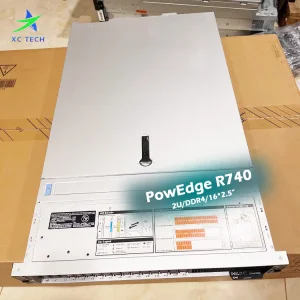
Near-edge deployment requires compact, high-density server configurations capable of operating reliably in harsh environment cabinets. Dual-socket 1U and 2U OEM rack servers equipped with high-efficiency redundant power supplies deliver low latency processing right at the base station perimeter, offloading central data core congestion.
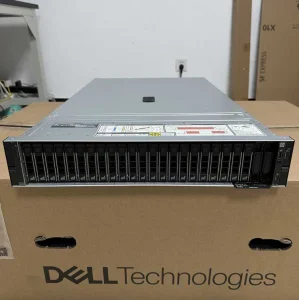
Modern enterprise telecommunication operators require massive virtual machine (VM) density and containers-as-a-service (CaaS) platforms. OEM rack servers featuring scalable processors (Intel Xeon 6 P-Core / AMD EPYC 9004/9005 series) with 24 to 32 DDR5 DIMM slots maximize compute density while keeping rack footprint minimal.
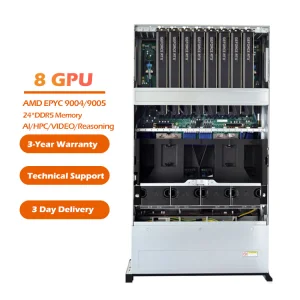
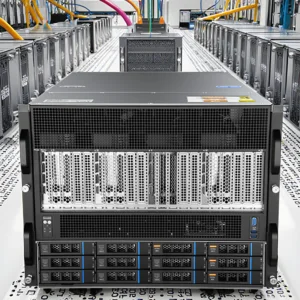
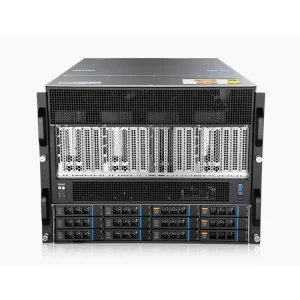
High-density 4U and 8U GPU servers designed specifically for multi-GPU training and inference operations. Built to host up to 8 double-width accelerator cards, these platforms power real-world video AI surveillance, deep learning natural language processing, and advanced predictive analytics for smart city systems.
National defense, utility, and municipal public safety networks require locked-down firmware, hardware security roots of trust, and complete supply chain transparency. Custom OEM chassis provide specialized tampering detection and customized BIOS configurations for isolated network environments.
Key technical evaluation factors for IT Directors, Network Procurement Managers, and Global Wholesalers.
Evaluating OEM telecommunication suppliers requires looking beyond capital expenditure (CapEx) alone. Global enterprise procurement teams evaluate vendor capabilities through a strict multi-tiered matrix focusing on long-term Operational Expenditure (OpEx), hardware reliability, component lifecycle availability, and raw material traceability.
Data center Power Usage Effectiveness (PUE) is heavily impacted by server fan power consumption and thermal dissipation efficiency. High-efficiency OEM chassis utilize dynamic pulse-width modulation (PWM) fan control curves paired with platinum or titanium efficiency power supplies (80 Plus Titanium certification), reducing internal thermal dissipation overhead by up to 18%.
Telecommunications platforms generally demand continuous 5-to-7 year active service windows. Reliable OEM suppliers establish structured buffer inventories for legacy components—such as specific CPU stepping codes, matching DDR4/DDR5 DRAM batches, and specialized RAID controller chips—preventing network disruption during mandatory maintenance cycles.
Modern infrastructure management relies on seamless remote orchestration via industry-standard protocols such as DMTF Redfish and IPMI 2.0. OEM solutions deliver custom management controller interfaces allowing centralized software-defined data center (SDDC) automation tools to monitor fan speeds, rail voltages, thermal sensors, and error-correcting code (ECC) memory logs remotely.
Transparent operational metrics, established export heritage, and zero-defect product testing procedures.
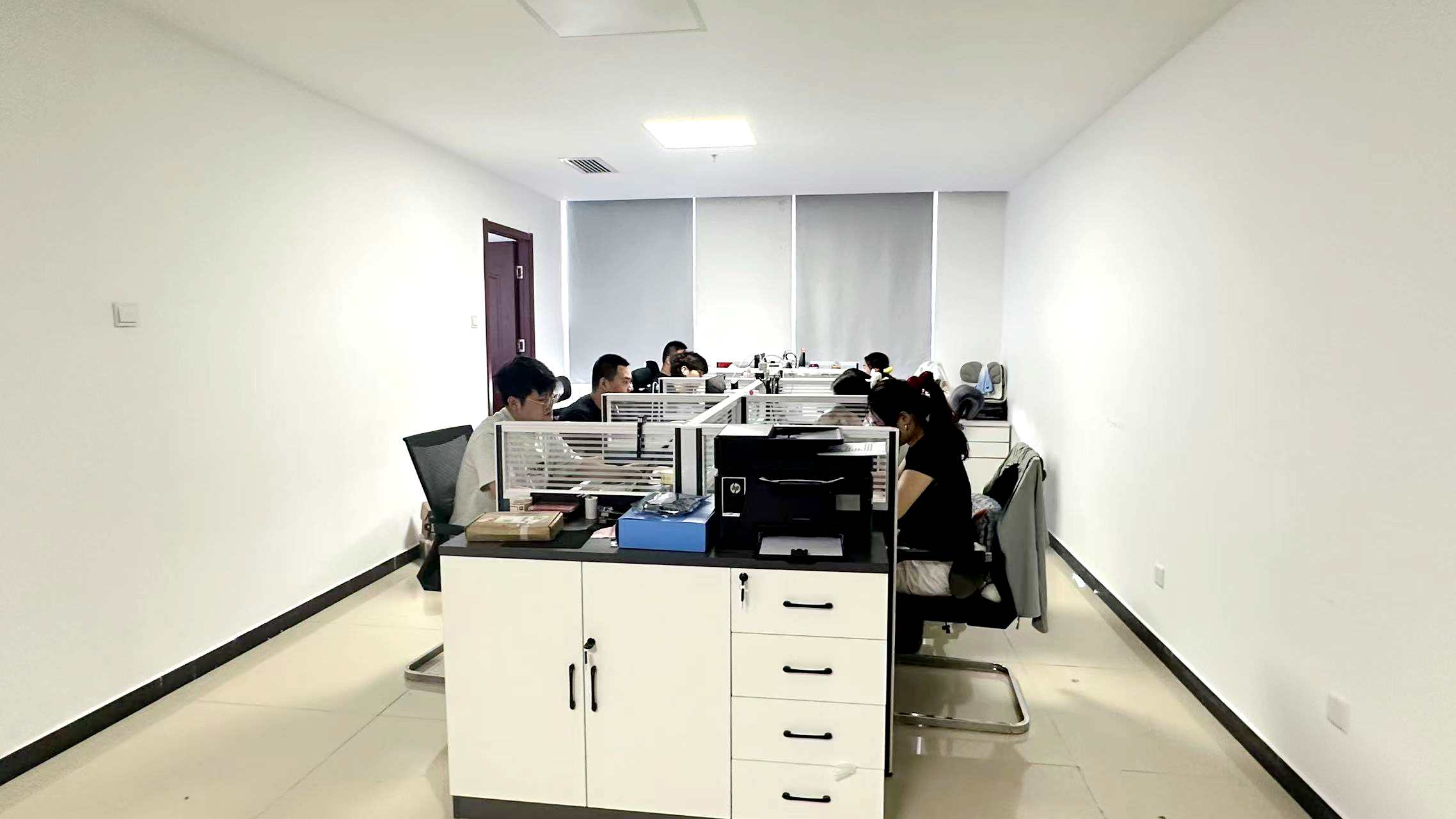
Discover high-performance deep learning servers, multi-GPU computing nodes, and scalable enterprise server systems tailored for telecommunications operators and digital platforms.
Comprehensive answers regarding custom OEM manufacturing capabilities, component sourcing, quality assurance, and international export logistics.
 Vertex AI Server